Not knowing is fine; but not knowing that you don't know (aka thinking that you know when you don't) = big problem.
“Not ignorance, but ignorance of ignorance is the death of knowledge” - Alfred North Whitehead
Is there a particular type of person that just tick you off immensely? Someone who you just can't stand being around with; so much so that you just wanna get the hell out ASAP or you know things would get ugly. Well, some say that in most cases, what you hate in others is what you hate about yourself. So what do I find absolutely disturbing in others? It's just one word really: IGNORANCE.
Thursday, October 11, 2012
Saturday, March 24, 2012
The foe
Is not evil,
Nor is it suffering itself.
It's the fear of them.
With fear, one attempts to escape.
With fear of that fear, one hides in denial.
It is that fear that hinders and ultimately destroys any humanity that one has.
Make no mistake; it's impossible to defeat such a foe, lying deep within your heart.
As they say: if you can't beat them, join them.
Therefore, when you catch yourself in any kind of distress,
Don't fight it, let yourself loose and allow it to penetrate you, soak yourself in it.
As you fade into the foe, the foe fades into you;
Then you'll find yourself one, complete, empty, and free...once again.
Saturday, February 18, 2012
Thinking about "Positive Thinking"
I just heard someone refers the concept of positive thinking as an irrational optimism. And then I realized how much the term has been abused (or not). I don't know how the masses understand "positive thinking" nowadays. But after a bit of contemplating, I think this is what the term really means (maybe it has been said, I don't know). Anyways, in my understanding, being positive is not equivalent to being optimistic. Being positive is to love. On the flip side, being negative is to fear. Some examples below:
Friday, February 17, 2012
My Religion is Legit = Yours is Not?
Saying one religion is better than others is like saying a M-size shirt is better than a L-size shirt.
Wednesday, February 15, 2012
Thought
Where does it come from?
Could it be told with words?
If so, what is delivering those words?
Who is there to comprehend?
They say a picture is worth a thousand words.
But could a thousand pictures convey a thought?
Thoughts come in and out of my mind as they please. And I (if there's such a thing) am left speechless...
Could it be told with words?
If so, what is delivering those words?
Who is there to comprehend?
They say a picture is worth a thousand words.
But could a thousand pictures convey a thought?
Thoughts come in and out of my mind as they please. And I (if there's such a thing) am left speechless...
Wednesday, December 21, 2011
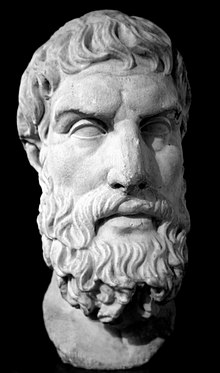
Introducing...Epicureanism—the Materialist
In this new series I'll be summarizing various religions and philosophical systems in the simplest way possible. It should be quick and easy to read allowing us to compare and contrast . I'll only focus on their views of the following aspects:
- Nature of the cosmos and our place within it
- God?
- Evil?
- How should we live?
First up, Epicureanism
Tuesday, December 20, 2011
Two Videos on Mirror Neurons
Just watch them; will ya?
The RSA Animate speaker talks about how we are able to associate ourselves as one family by bloodlines, to religions, to nation states, to nations; he seems to suggest that our sense of empathy has been expanding and progressing through time. I don't know if that is an accurate description. The sense of belonging is often caused by the discoveries of other bloodlines, religions, etc. We associate with our own bloodline, religion, race as one family only in the face of a common enemy. Therefore, I think our sense of empathy in the current stage largely sprung from the notion of otherization, the "us VS them" ideology. When do students in the same class see themselves as one? When they are competing with other class. I had this thought when I was watching the last Olympics. During the regular ATP tour (men's tennis), players represent themselves and there are no flags next to their names; win or lose, it's just another day in the office. However during the Olympics, all of a sudden it's Spain VS Swiss; and they're competing for the pride of their respective countries. We identify ourselves as different groups in different times. Sometimes, especially during the time of solitude, we do not even empathize with ourselves. I remember there were times where I would have conflicts within myself and it felt as if there were multiple selves inside me, fighting to become the authority.
Another circumstance that leads us see ourselves as one is in a time of extreme crisis. But it's relatively harder to bring about unity comparing to the "common enemy" circumstance because the threat of such crisis may not be as apparent and immediate.
The last thing I want to hear is the word "patriotic" being thrown around because that to me indicates a time of war or crisis.
It's certainly possible to see ourselves as one biosphere, but do we need an "other" or a catastrophic crisis as a precondition? I sincerely hope not. As the speaker of the RSA Animate puts it, we are softwired to be empathic. That to me suggests that we have a choice to be empathic or not. During a time of war or crisis, it's easier to choose the former. But to be empathic with everything there is during a time of peace almost seems impossible. The Buddha did it; Jesus did it as well; but can we?